
 Image 1 of 1
More Info:
Image Dimensions: 8500 x 5423 px
Location: Utah
Note: This image is exclusive to this site. © 2025 Ray Redstone
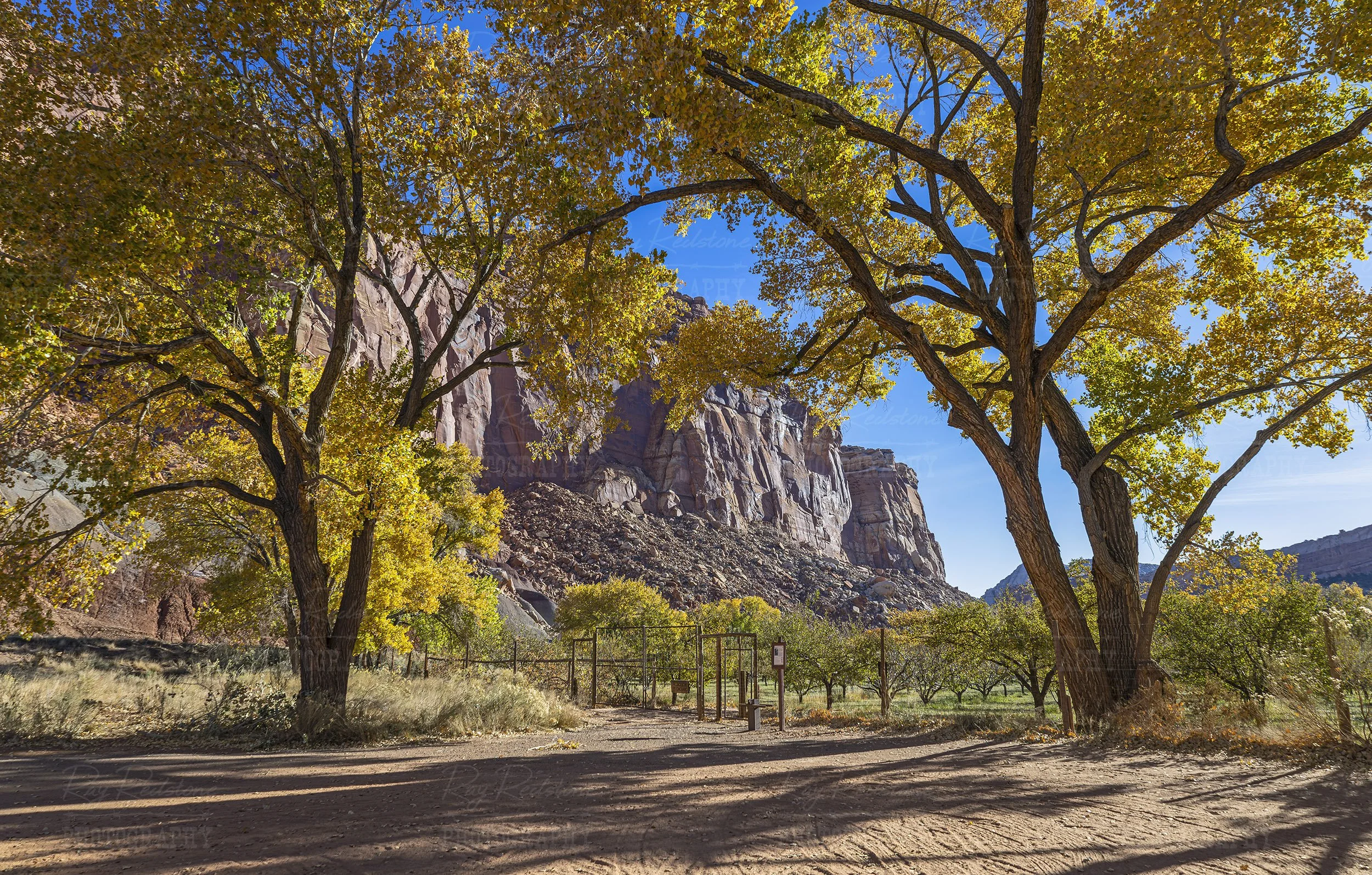
Captured in the fall of 2022, this stunning landscape image features the entrance of an active fruit tree orchard in Capitol Reef National Park in Utah.
Capitol Reef National Park contains historic fruit orchards in the Fremont River valley near the park’s Fruita area. In the late 19th and early 20th centuries, Mormon settlers planted apple, pear, cherry, peach, and apricot trees that still survive today. The orchards are maintained by the National Park Service and local volunteers; they are living cultural landscapes that illustrate early settler farming in a desert environment.
Visitors can walk the orchard trails, see interpretive signs, and (seasonally and when fruit is available) pick fruit during designated harvest days or buy produce at the Fruita Schoolhouse or nearby park-run events. Peak blossom occurs in spring, with fruit ripening from late summer into early fall depending on variety and yearly conditions. The orchards also provide habitat for birds and pollinators and offer a pleasant shaded spot amid the park’s red-rock scenery.
Practical notes:
Location: Fruita area near the historic Gifford Homestead and Fruita Schoolhouse.
Best times: Spring for blossoms; late summer–early fall for fruit.
Rules: Follow park posted regulations about harvesting; only pick during authorized events or with permission.
Accessibility: Short, easy walking paths; some orchards near parking and picnic areas.
Captured in the fall of 2022, this stunning landscape image features the entrance of an active fruit tree orchard in Capitol Reef National Park in Utah.
Capitol Reef National Park contains historic fruit orchards in the Fremont River valley near the park’s Fruita area. In the late 19th and early 20th centuries, Mormon settlers planted apple, pear, cherry, peach, and apricot trees that still survive today. The orchards are maintained by the National Park Service and local volunteers; they are living cultural landscapes that illustrate early settler farming in a desert environment.
Visitors can walk the orchard trails, see interpretive signs, and (seasonally and when fruit is available) pick fruit during designated harvest days or buy produce at the Fruita Schoolhouse or nearby park-run events. Peak blossom occurs in spring, with fruit ripening from late summer into early fall depending on variety and yearly conditions. The orchards also provide habitat for birds and pollinators and offer a pleasant shaded spot amid the park’s red-rock scenery.
Practical notes:
Location: Fruita area near the historic Gifford Homestead and Fruita Schoolhouse.
Best times: Spring for blossoms; late summer–early fall for fruit.
Rules: Follow park posted regulations about harvesting; only pick during authorized events or with permission.
Accessibility: Short, easy walking paths; some orchards near parking and picnic areas.
Image Dimensions: 8500 x 5423 px
Location: Utah
Note: This image is exclusive to this site. © 2025 Ray Redstone